

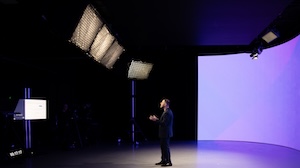
 Video has a unique ability to convey complex ideas quickly and clearly. This is an extremely valuable format for investor relations communications, where clarity, credibility and differentiation are key to demonstrating value.
Here, we take a look at a few examples of video being used to communicate with investors across use cases from Investor Days to executive positioning.
Why Video Matters in Investor Relations
As investor audiences have become time-constrained and digitally oriented, traditional content formats such as slide presentations and written disclosures are not as sufficient on their own. Video adds a critical new dimension, allowing executive teams to communicate their strategy, and more importantly how their leadership thinks, prioritizes and executes against it.
Video allows for depth across messaging, quality and content repurposing. Leadership tone and confidence can influence investor perception as much as the underlying message itself. A video strategy enables IR leaders to convey those subtleties at scale, ensuring that even investors who aren’t in the room still receive a compelling narrative, supported by a larger context.
Visual storytelling adds a layer of refinement to traditional communication assets. A well-produced video signals intention when engaging investors. Video can be a strong format to enhance investor touch points, including:
- Introducing the Company’s business and strategy
- Strategic updates
- IPO roadshows
- Earnings and financial announcements
- Investor days
- Periods of heightened scrutiny
Video is also a durable format that extends the reach and lifespan of key IR moments. As one example, the video production from an investor day can create a library of reusable, on-demand content that can be leveraged across earnings cycles, marketing channels and stakeholder communications.
Three Examples of High-Quality Video in IR
1. Zeta Global: The Approach to Investor Days
Arbor worked with Cardboard Spaceship to capture a best-in-class Investor Day. This video shares our perspective on how to successfully engage investors.
The video explores how companies can shift their mindset around Investor Days from a necessary expense to a meaningful return on investment by delivering real impact. Visually, the video is striking. The b-roll footage from the Data Summit adds depth to the narrative, which was carefully crafted from a video interview and presentation clips.
Why it works:
The video is rooted in real-world evidence from Zeta Global’s event. The audience can see and hear tangible examples that support the messaging.
2. Zeta Global: Turning Strategy Into an Investor Narrative

Zeta’s Data Summit video, another Cardboard Spaceship production, exemplifies how to elevate an investor presentation into a cohesive strategic narrative with a powerful production engine. The video frames Zeta’s data cloud strategy through a structured storyline, blending executive commentary and product visualization to convey differentiators.
Complex ideas around data infrastructure, governance and AI are broken into visual chapters, making the concepts easier to absorb. Rather than filming a basic presentation, the added production value delivers crystal-clear video and picture-in-picture viewing to create a more engaging experience for on-demand viewers.
Why it works:
The video transforms dense, technical strategy into a compelling, investor-ready story without diluting the substance of the material.
3. Surf Air: Executive Storytelling With Clarity and Conviction
The Surf Air team created two videos, one with CEO Deanna White and another with CFO Oliver Reeves, during a time of transition. As the company was developing a new strategic vision and reshaping its core narrative, their executives used video to share the new positioning in a more direct and engaging way.
The videos allowed their CEO and CFO to gain valuable face time while conveying the company’s strategic path forward. This type of video can be especially powerful for companies navigating transition, giving investors a clear line of sight into how leadership is thinking – and why that thinking is actionable.
Why it works:
It distills strategy into a confident, executive-led narrative that investors can quickly understand and evaluate.
Emphasize Storytelling in IR
The most effective investor communications drive their audiences to action by aligning with stakeholder needs and values. Video, when done right, provides a high-quality, engaging format to convey the company narrative and showcase the people driving the strategic decisions.
For companies looking to differentiate in increasingly competitive capital markets, the question is no longer whether to use video in IR, but how strategically and consistently it can be deployed to tell a story investors can actually believe. Learn more about how Arbor can help differentiate your story.