

 Leadership changes oftentimes impact valuation. Last year, U.S. boards saw their fastest churn rate since 2005. When Disney unexpectedly reinstated Bob Iger in November 2022, the stock jumped 8 percent in pre-market trading.
Who sits in the corner office matters and how that change is framed can move billions in shareholder value. Executive transitions require thoughtful communication to clearly convey what’s transpiring, the timing and the impact on company strategy – all factors that will reassure investors.
Why Investors Get Anxious: The Risks of Executive Transition
- Strategic uncertainty: A successor may reset guidance, capital-allocation priorities or M&A strategy, that can immediately impact profitability and strategy for the long-term.
- Balance-sheet “clean-ups”: New leaders may write down assets or divest non-core units, pressuring near-term earnings.
- Credibility gaps: First-time public-company CEOs or outsiders to an industry must prove domain expertise quickly. Even if highly qualified, they’ll be tested with industry-specific and operational challenges.
- Finance-leadership disruptions: In the case of an unexpected CFO departure, investor concerns about financial results and internal controls magnify. CFOs have deep visibility into a company’s internal financial strengths and weaknesses, and there may be a perception that the company is facing an imminent crisis.
Left unaddressed, these doubts can affect company credibility, elevate risk of rumors and invite distracting speculation, making executive transitions one of the top investor relations challenges we see.
What Do Investors Want?
Seasoned investors reward leadership teams that deliver rather than tell. The number one driver of investment decisions is confidence in the management team, and the same is true for new leadership teams. Investors gravitate toward executives who can clearly communicate the narrative and demonstrate the “why” behind their strategy, even if they are brand new to the role.
The best way to build confidence and credibility is through transparency and clear communication. Two-way engagement through a listening tour, introductory video calls with shareholders and direct communications with sell-side analysts demonstrate to the investment community the type of leader the new CEO or CFO will be. These steps are critical to easing concerns and gaining early buy-in.
The Four-Phase Communication Roadmap to Leadership Transitions
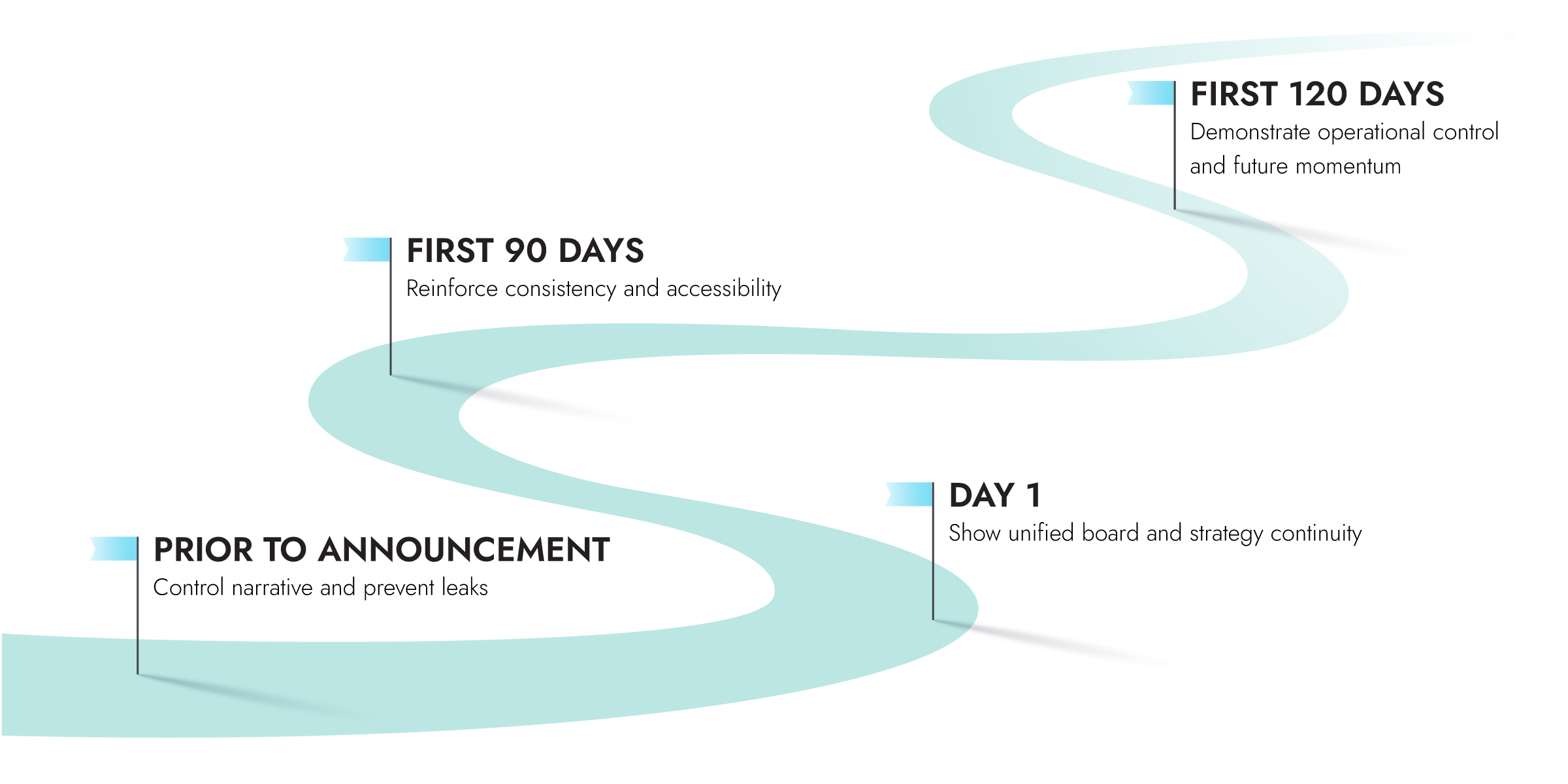
- Prior to Announcement: Craft a cohesive message with key talking points and a comprehensive Q&A . Most importantly, align with internal teams on overall messaging to all external and internal constituents.
- Day 1: Issue internal and external statements simultaneously. The new executive hosts an analyst and investor call to reassure strategic continuity.
- First 90 Days: Conduct a listening tour, meet with top shareholders, analysts and host a virtual fireside chat to reach the broader investor base to reaffirm strategy, capital allocation and culture.
- First 120 Days: Deepen visibility and commitment with facility visits, conference participation, select media interviews and a strategic roadmap update that showcases operational command.
Getting Comfortable With Wall Street During A Transition Period
Leadership shifts can test the most seasoned boards and management teams. Arbor Advisory Group’s expertise in strategic messaging combined with deep regulatory knowledge prepares newly appointed executives for success.
Paired with the structured roadmap above, our guidance transforms uncertainty into a confidence-building event. Learn more about our leadership transition services.